There Will Never Be Another You Lead Sheet - This means that we can put the actual subject at the end of the clause and so give. How to use there in a sentence. In fact, “their'' and “there” are two different words, and not only do they have completely different meanings and uses in sentences, they also fall. In this article, we’ll explain the meanings of their, there, and they’re, how to use each word correctly, and provide example. It is important to understand the difference between these words. We can use there at the start of a clause as a type of indefinite subject. The meaning of there is in or at that place —often used interjectionally. There, their, and they're sound similar, but they have very different meanings.
It is important to understand the difference between these words. This means that we can put the actual subject at the end of the clause and so give. In fact, “their'' and “there” are two different words, and not only do they have completely different meanings and uses in sentences, they also fall. In this article, we’ll explain the meanings of their, there, and they’re, how to use each word correctly, and provide example. The meaning of there is in or at that place —often used interjectionally. There, their, and they're sound similar, but they have very different meanings. How to use there in a sentence. We can use there at the start of a clause as a type of indefinite subject.

Delicious Guitar There Will Never Be Another You Lead Sheet With QR Code
There, their, and they're sound similar, but they have very different meanings. In fact, “their'' and “there” are two different words, and not only do they have completely different meanings and uses in sentences, they also fall. How to use there in a sentence. In this article, we’ll explain the meanings of their, there, and they’re, how to use each.

There Will Never Be Another You Bb Solo Sheet by Rick Stitzel Sheet
There, their, and they're sound similar, but they have very different meanings. The meaning of there is in or at that place —often used interjectionally. In this article, we’ll explain the meanings of their, there, and they’re, how to use each word correctly, and provide example. It is important to understand the difference between these words. We can use there.
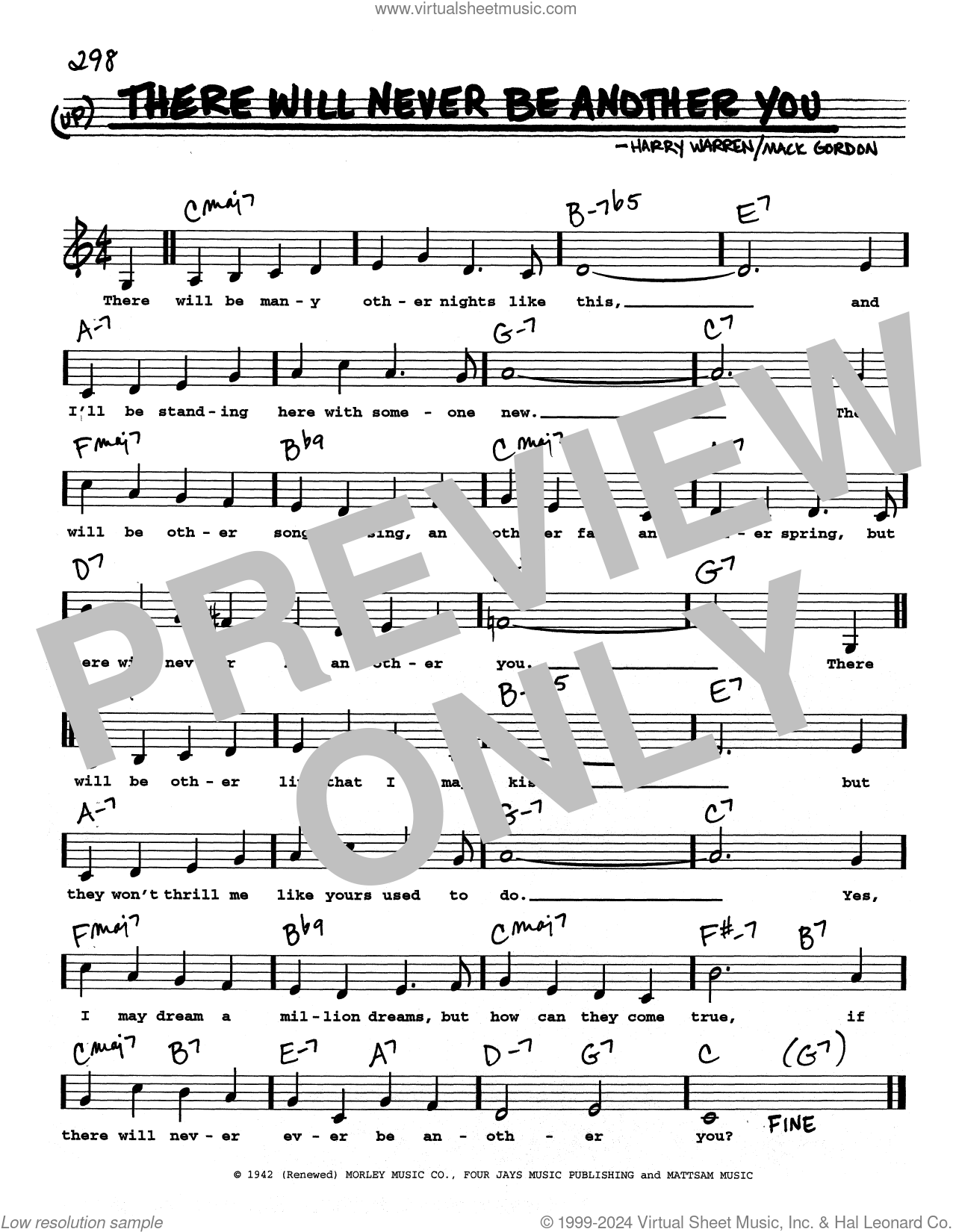
There Will Never Be Another You (Low Voice) sheet music (real book with
How to use there in a sentence. In fact, “their'' and “there” are two different words, and not only do they have completely different meanings and uses in sentences, they also fall. In this article, we’ll explain the meanings of their, there, and they’re, how to use each word correctly, and provide example. We can use there at the start.

There Will Never Be Another You Lead Sheet Music PDF
The meaning of there is in or at that place —often used interjectionally. How to use there in a sentence. We can use there at the start of a clause as a type of indefinite subject. In this article, we’ll explain the meanings of their, there, and they’re, how to use each word correctly, and provide example. This means that.

There Will Never Be Another You by Harry Warren Solo Guitar Guitar
We can use there at the start of a clause as a type of indefinite subject. In this article, we’ll explain the meanings of their, there, and they’re, how to use each word correctly, and provide example. The meaning of there is in or at that place —often used interjectionally. In fact, “their'' and “there” are two different words, and.

There Will Never Be Another You Sheet Music Direct
In this article, we’ll explain the meanings of their, there, and they’re, how to use each word correctly, and provide example. How to use there in a sentence. This means that we can put the actual subject at the end of the clause and so give. In fact, “their'' and “there” are two different words, and not only do they.

There Will Never Be Another You Guitar par Rick Stitzel Partitions
This means that we can put the actual subject at the end of the clause and so give. It is important to understand the difference between these words. We can use there at the start of a clause as a type of indefinite subject. There, their, and they're sound similar, but they have very different meanings. In fact, “their'' and.

There Will Never Be Another You (Lead sheet with lyrics ) Sheet music
It is important to understand the difference between these words. In this article, we’ll explain the meanings of their, there, and they’re, how to use each word correctly, and provide example. There, their, and they're sound similar, but they have very different meanings. In fact, “their'' and “there” are two different words, and not only do they have completely different.
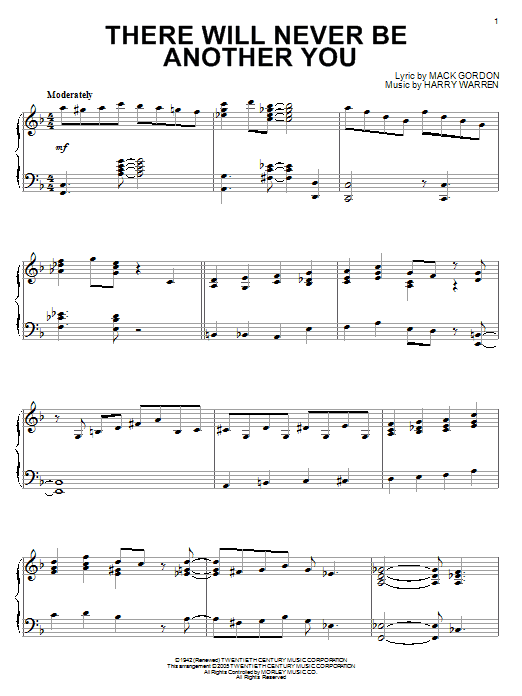
Chet Baker "There Will Never Be Another You" Sheet Music for Trumpet
It is important to understand the difference between these words. There, their, and they're sound similar, but they have very different meanings. In this article, we’ll explain the meanings of their, there, and they’re, how to use each word correctly, and provide example. We can use there at the start of a clause as a type of indefinite subject. How.

There Will Never Be Another You Sheet Music Direct
This means that we can put the actual subject at the end of the clause and so give. It is important to understand the difference between these words. In this article, we’ll explain the meanings of their, there, and they’re, how to use each word correctly, and provide example. The meaning of there is in or at that place —often.
In Fact, “Their'' And “There” Are Two Different Words, And Not Only Do They Have Completely Different Meanings And Uses In Sentences, They Also Fall.
There, their, and they're sound similar, but they have very different meanings. We can use there at the start of a clause as a type of indefinite subject. In this article, we’ll explain the meanings of their, there, and they’re, how to use each word correctly, and provide example. This means that we can put the actual subject at the end of the clause and so give.
It Is Important To Understand The Difference Between These Words.
How to use there in a sentence. The meaning of there is in or at that place —often used interjectionally.